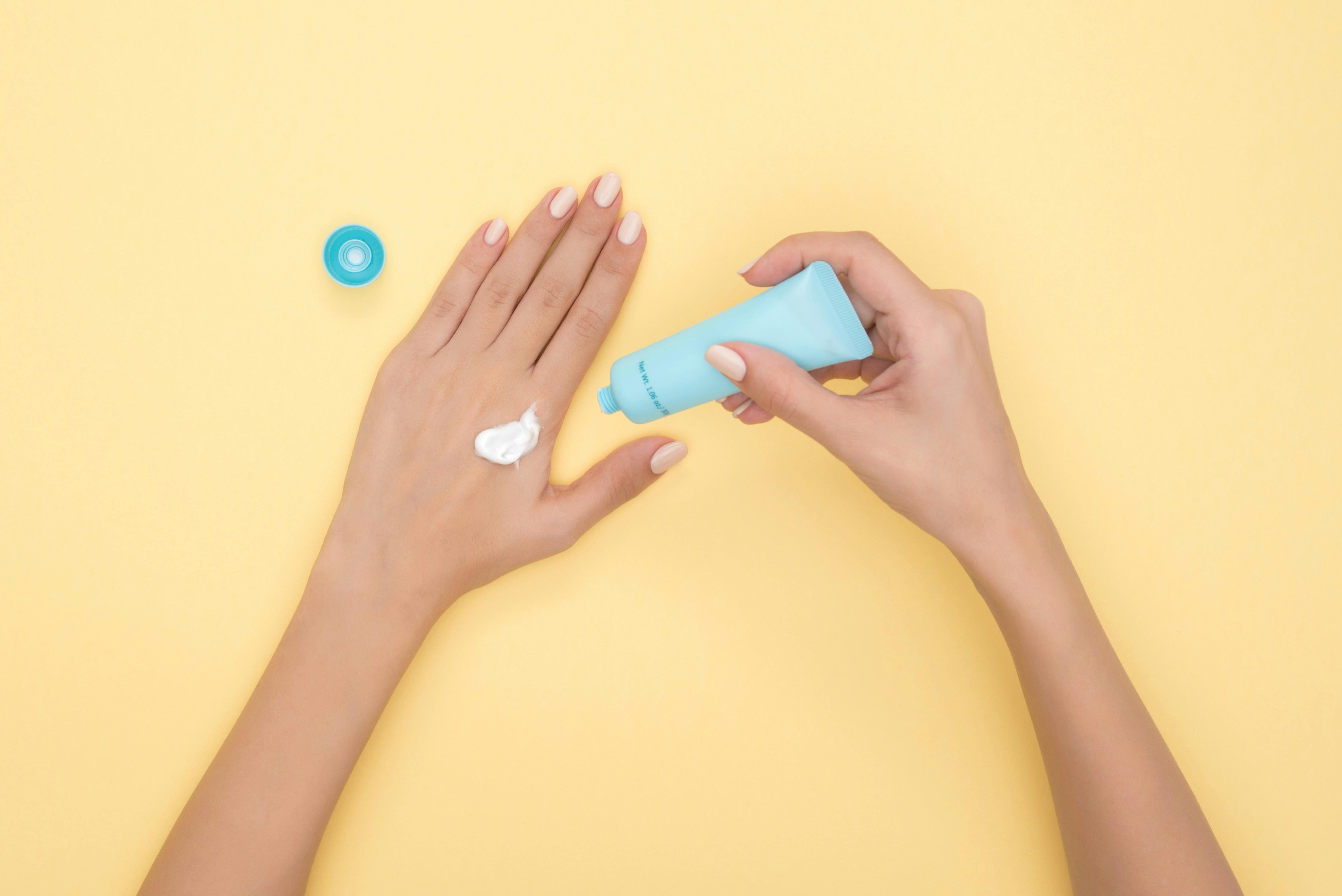
Sunscreen isn’t only for sunny days; it should be an important part of your daily routine year-round, even in the winter. 80% of the sun’s rays pass through clouds, and even if you work inside, you are exposed to UV rays through windows.
Author: Amy McCarty
As summer days bring sunshine, beach trips, and long hours outdoors, it’s easy to forget the toll the sun can take on our skin. But while soaking up the rays might feel good in the moment, protecting your skin with SPF is essential for maintaining skin health and lowering your risk of skin cancer—now and year-round.
UV Radiation and Skin Cancer:
Skin cancer is highly prevalent in Canada, with more than 80,000 cases diagnosed every year [1]. Exposure to ultraviolet (UV) radiation from the sun is associated with 80-90% of skin cancers [1]. Although some exposure to UV radiation is important for the body’s production of vitamin D, too much UV can damage DNA in skin cells, causing them to divide/replicate too quickly and form tumours, which may be cancerous [2]. Sunscreen works by blocking UV radiation and helps prevent skin cancer, sunburns, and sun damage/aging [1].
UV radiation from the sun is subdivided into three types: UVA, UVB, and UVC [1]. UVB rays consist of short wavelengths that hit surface layers of skin and are responsible for sunburns and skin cancers, while UVA rays are longer wavelengths that hit deeper levels of skin, causing tanning and skin aging [1]. UVC rays do not pass through the earth’s atmosphere and are not absorbed by skin [3]. “Broad-spectrum” sunscreens currently available protect against both UVB and UVA rays [4].
When to use sunscreen?
Sunscreen isn’t only for sunny days; it should be an important part of your daily routine year-round, even in the winter. 80% of the sun’s rays pass through clouds, and even if you work inside, you are exposed to UV rays through windows [5]. Sunscreen is safe and recommended for everyone apart from babies under the age of six months, who have sensitive skin [4].
Types of Sunscreen
There are two main types of sunscreen. First, mineral/physical sunscreens contain mineral active ingredients, such as titanium dioxide and zinc oxide, which reflect UV rays away from your skin [4,6]. These sunscreens typically have a thicker consistency and start working immediately upon application [7].
On the other hand, chemical sunscreens contain chemically active ingredients, such as avobenzone, octisalate, and octocrylene, which absorb UV rays [4,6]. These sunscreens must first be absorbed into the skin and therefore must be applied approximately 20 minutes before sun exposure for effective UV protection.
Physical sunscreens may cause less skin irritation for those with sensitive skin, but both types are generally safe and effective [4].
The SPF number associated with each sunscreen indicates how long UVB rays would take to redden sunscreen-applied skin compared to skin without sunscreen; for example, skin with SPF 30 would take 30 times as long to burn compared to skin without any sunscreen applied [4].
The benefits of daily sunscreen use:
- Maintain skin’s protective barrier:
- Sunscreen helps minimize the impact of UV rays, preventing sunburns and skin irritation. Sun exposure can also amplify the negative effects of skin conditions, including rosacea, eczema, and acne. The use of daily SPF can help manage these conditions [5].
- Reduce risk of skin cancer:
- UVB rays are a major cause of developing skin cancers, including melanoma, basal cell carcinoma, and squamous cell carcinoma [5], the three most common skin cancers [6].
- According to The Skin Cancer Foundation, studies show that regular daily use of SPF 15 reduces the risk of developing squamous cell carcinoma by 40% and melanoma by 50% [4].
- Help maintain skin integrity & clarity:
- Sun exposure leads to more irregular pigmentation, formation of wrinkles, and other signs of aging over time [5].
In conclusion, wearing SPF should be an important part of your daily routine, no matter the season, to maintain skin health and reduce the risk of skin cancer.
Editors
Katya Krykunova, Mokhtar Albakoosh, Rawad Al-Aarg, Majd Al-Aarg (Editor-in-Chief)
Designer
Web design by Majd-Alarg
Additional Credits
Photo by Moose Photos
References
- Sander M, Sander M, Burbidge T, Beecker J. The efficacy and safety of sunscreen use for the prevention of skin cancer. Canadian Medical Association Journal. 2020 Dec 14;192(50). doi:10.1503/cmaj.201085
- Cleveland Clinic. Ultraviolet Radiation and Skin Cancer [Internet]. Cleveland Clinic; 2022 Nov 16 [cited 2024 Aug 24]. Available from: https://my.clevelandclinic.org/health/diseases/10985-ultraviolet-radiation
- Torborg, L. Sunscreen best practices [Internet]. Mayo Foundation for Medical Education and Research; 2016 Jun 21 [cited 2024 Aug 22]. Available from: https://newsnetwork.mayoclinic.org/discussion/mayo-clinic-q-and-a-apply-sunscreen-generously-and-frequently-for-full-protection/
- The Skin Cancer Foundation. All About Sunscreen [Internet]. 2022 July [cited 2024 Aug 19]. Available from: https://www.skincancer.org/skin-cancer-prevention/sun-protection/sunscreen/#:~:text=and%20skin%20cancer!-,Who%20should%20use%20sunscreen%3F,whether%20or%20not%20you%20burn
- Cleveland Clinic. You should be wearing sunscreen every day [Internet]. Cleveland Clinic; 2023 Aug 8 [cited 2024 Aug 19]. Available from: https://health.clevelandclinic.org/why-you-should-wear-sunscreen-every-day
- Harvard Health. The science of sunscreen [Internet]. 2021 Feb 15 [cited 2024 Aug 19]. Available from: https://www.health.harvard.edu/staying-healthy/the-science-of-sunscreen
- Chien, AL-L. Sunscreen and your morning routine [Internet]. John Hopkins Medicine; [cited 2024 Aug 22]. Available from: https://www.hopkinsmedicine.org/health/wellness-and-prevention/sunscreen-and-your-morning-routine
 Hands On Health Magazine