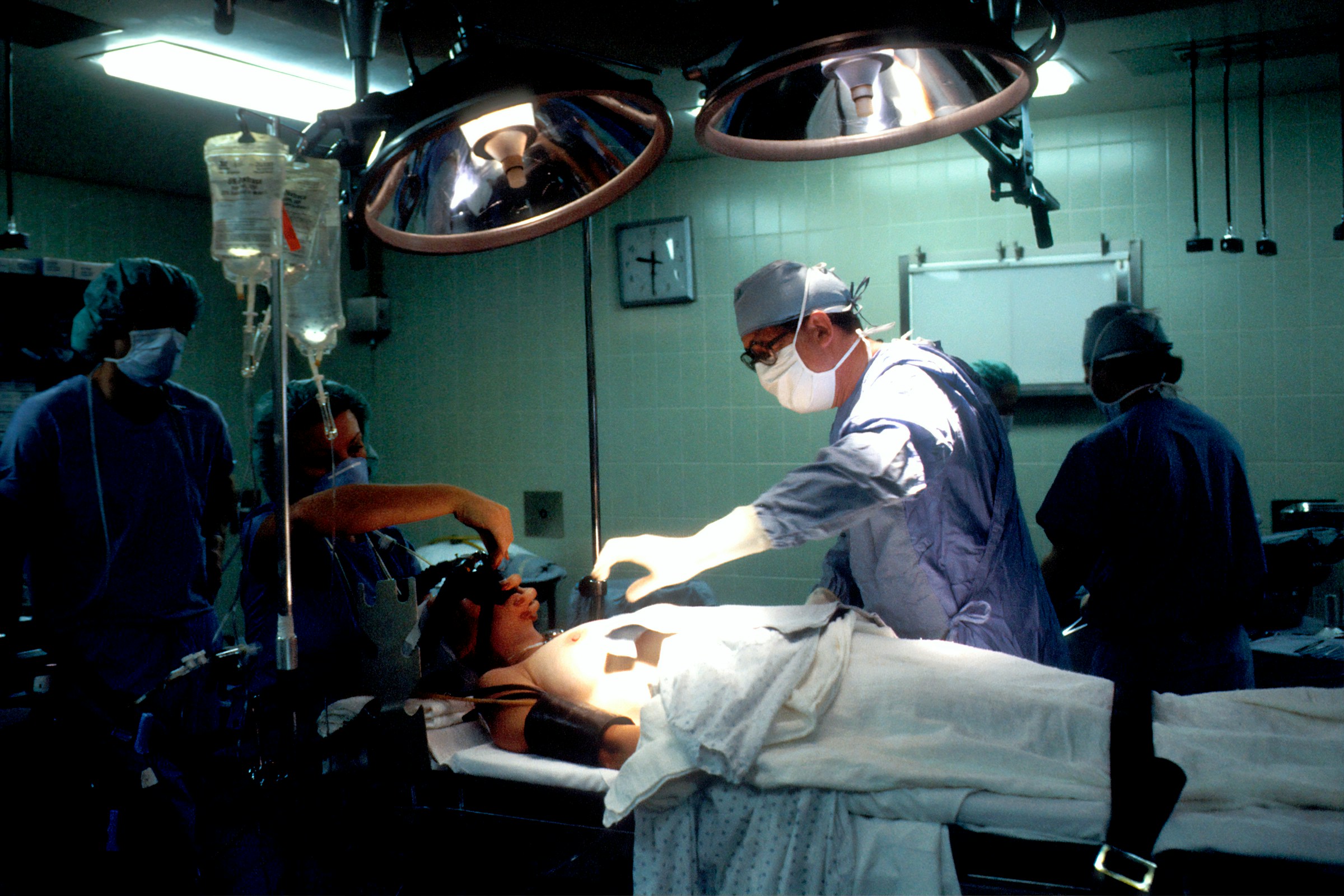
Transplant recipients adopting personality traits similar to their donors are often dismissed as medical mysteries. Is this phenomenon overlooked? This article investigates cellular memory, proposed research theories and presents a controversial case study which achieved Hollywood stardom, which may unveil some plausibility to the presumed ‘myth’.
Author: Sejal Rai
The Romani people have long opposed organ transplantation due to their beliefs regarding the afterlife. They propose that buried bodies must remain physically intact for the soul to remain pure, a notion stemming from the belief that the soul retraces its steps for a year after an individual’s death [1]. Since the first successful organ transplant in 1954 [2], many discussions regarding spirituality, religion, culture, and the supernatural implications of this practice have arisen. However, one belief reigns supreme amongst researchers in the scientific community, despite opposition arguing the lack of scientific basis. This controversial belief suggests that recipients of heart transplants can adopt the personality characteristics and traits of their donors. The main support for this hypothesis involves the intricate concept of cellular memory. This article investigates cellular memory and proposed research theories while presenting a controversial case study that achieved Hollywood stardom.
Notable Researchers and Their Theories
The theory of cellular memory suggests that memories are not only stored in neuronal connections of the brain, but also in somatic cells of the body [3]. Dr. Paul Pearsall, an American neuropsychologist, and author of the 1998 book “The Heart’s Code”, discusses the connection between cellular memory and the heart. He writes, “every cell in the body is literally bathed in the info-energy conducted from and by the heart. Since the heart is a primary generator and transmitter of info-energy, it is central to our system’s recollection of its life–its cellular memory” [4, 5]. Dr. Mitchell Liester, a psychiatrist at the University of Colorado School of Medicine, published an article in 2019 in his journal, Medical Hypotheses. He proposed that “memories from the donor’s life are stored in the cells of the donated heart and are then ‘remembered’ by the recipient following transplant surgery” [6]. He discusses changes in food preference, transfer of memories, alterations in emotions, modifications of identity, and changes in personality traits that mimic those of the donors. He supports this statement using the broad concept of cellular memory and subfields of epigenetic memory1, DNA memory2 and RNA memory3 [7]. It is said that gene expression is the main mechanism behind all these recollection processes. Gene expression in the context of epigenetic memory refers to how these inherited DNA modifications influence whether specific genes are turned on or off. These DNA modifications can alter the properties and behavior of a cell by controlling which genes are expressed, thereby affecting the cell’s function and identity. These different types of cellular memories are theorized to be the root cause of the personality changes experienced by transplant recipients. The integration of the donor’s cells into the transplant recipient’s body results in the donor’s cells becoming an intrinsic part of the recipient’s system; influencing the recipient through cellular memory and genetic modification.
The Hollywood Case Study of Claire Sylvia
The most widely-known case of personality change induced by heart transplantation is that of Claire Sylvia. The 2002 Hollywood movie, Heart of a Stranger, starring Jane Seymour, was inspired by Claire’s real-life events following her operation. Post-transplantation, she developed sudden interests for beer, curvy blondes, and junk food, aligning with the preferences of her donor whom Claire herself was not previously fond of. She even began to have dreams of her donor, Tim L, whom she had never met. Upon visiting Tim L.’s family and finding pictures of him, Claire claimed that he was indeed the man in her dreams [10].
The Problem With the Science
Upon hearing such miraculous stories, and considering input from distinguished experts in the field of personality change following heart transplantation, one may wonder where the controversy arises. The source of the debate is that there hasn’t been enough research or studies done on the subject to either validate or contradict the hypothesis. Dr. John Wallwork, U.K.’s National Health Service’s former director in the transplant service, is adamant on this correlation being founded on biased research rather than scientific basis [10]. A reputable German study was completed in 1992 in which 47 organ transplant patients were surveyed [11]. The majority reported no personality change. However, 15% of those surveyed did report experiencing a personality shift. Researchers attributed the correlation to the procedure being extremely invasive and life-threatening, leaving patients with traumatic after-effects that impacted their psyche. However, 6% were adamant that their personality shift was attributed to their donor. Many of the studies on this subject had sample sizes too small to be considered reliable or were done to cement researchers’ pre-existing bias. Dr. Liester, who supports the correlation in his journal Medical Hypotheses, stated that “this phenomenon has not been well researched and is not well understood” [7]. Although he believes there is no significant science at this time to support the suggestion, there is also not enough scientific evidence to disprove the hypothesis, nor to dismiss the real experiences of patients who have undergone personality shifts after a heart transplant.
Conclusion
In conclusion, the intersection between heart transplantation procedures and the concept of cellular memory presents a fascinating and controversial field of study. Ever since the first successful heart transplant in 1967, intriguing theories have suggested that personality traits of organ donors can be adopted. Two notable medical researchers in the field, Dr. Paul Pearsall and Dr. Mitchell Liester, have explored and continue to explore the theory of cellular memory as the driving force behind personality changes experienced by transplant recipients. Despite evidence and compelling case studies, such as that of Claire Sylvia, the scientific community is still divided due to the lack of research on the topic. Until greater evidence of correlation is provided and explanations are secure, the scientific debate will continue to be fueled by the personal experiences of transplant recipients, as well as the skepticism of scientists in the field.
Editors
Yasmin Anderson, Bayley Furtado, Majd Al-Aarg (Editor-in-Chief)
Designer
Web design by Majd-Alarg
Additional Credits
Photo by National Cancer Institute on Unsplash
References
- Religious attitudes about donation [Internet]. [cited 2024 Aug 8]. Available from: https://www.utsouthwestern.edu/education/medical-school/departments/transplant-services-center/faqs/religious-attitudes.html
- The history of organ donation and transplantation [Internet]. 2024 [cited 2024 Aug 8]. Available from: https://unos.org/transplant/history/#:~:text=The%20beginning-,In%201954%2C%20the%20kidney%20was%20the%20first%20human%20organ%20to,were%20begun%20in%20the%201980s
- Cosier S. Could memory traces exist in cell bodies? [Internet]. Scientific American; 2024 [cited 2024 Aug 8]. Available from: https://www.scientificamerican.com/article/could-memory-traces-exist-in-cell-bodies/
- Pearsall PP. The heart’s code. New York: Harmony Books; 2013.
- Pearsall PP. The heart’s code by Paul P. Pearsall: 9780767900959: Penguinrandomhouse.com: Books [Internet]. Harmony/Rodale; [cited 2024 Aug 8]. Available from: https://www.penguinrandomhouse.com/books/128861/the-hearts-code-by-paul-p-pearsall/#:~:text=About%20The%20Heart’s%20Code,body%2C%20mind%2C%20and%20spirit
- Liester MB. Personality changes following heart transplantation: The role of cellular memory [Internet]. 2020 [cited 2024 Aug 8]. Available from: https://www.sciencedirect.com/science/article/pii/S0306987719307145?ref=pdf_download&fr=RR-2&rr=8b01284cdabaab6d
- Mitchell B. Liester, Transplantation A changes following heart, Burker EJ, Ross H, Frierson RL, Dossey L, et al. Personality changes following heart transplantation: The role of cellular memory [Internet]. Churchill Livingstone; 2019 [cited 2024 Aug 8]. Available from: https://www.sciencedirect.com/science/article/pii/S0306987719307145
- D’Urso A, Brickner JH. Mechanisms of epigenetic memory [Internet]. U.S. National Library of Medicine; 2014 [cited 2024 Aug 8]. Available from: https://www.ncbi.nlm.nih.gov/pmc/articles/PMC4072033/
- Treffert D. Genetic memory: How we know things we never learned [Internet]. Scientific American; 2024 [cited 2024 Aug 8]. Available from: https://www.scientificamerican.com/blog/guest-blog/genetic-memory-how-we-know-things-we-never-learned/
- Cooten MV. This woman says she feels love differently since her heart transplant. she wants to know why | CBC radio [Internet]. CBC/Radio Canada; 2022 [cited 2024 Aug 8]. Available from: https://www.cbc.ca/radio/tapestry/where-the-heart-lives-transplant-memories-1.6531555
- BB-MBA. Does changing the heart mean changing personality? A retrospective inquiry on 47 heart transplant patients [Internet]. U.S. National Library of Medicine; [cited 2024 Aug 8]. Available from: https://pubmed.ncbi.nlm.nih.gov/1299456/
- D’Urso A, Brickner JH. Mechanisms of epigenetic memory [Internet]. U.S. National Library of Medicine; 2014 [cited 2024 Aug 8]. Available from: https://www.ncbi.nlm.nih.gov/pmc/articles/PMC4072033/
- Team BE. Cellular memory [Internet]. BetterHelp; 2024 [cited 2024 Aug 8]. Available from: https://www.betterhelp.com/advice/memory/what-is-a-cellular-memory-how-to-improve-it/
- Donor’s organ, Donor’s personality? let’s approach this sensibly [Internet]. 2024 [cited 2024 Aug 8]. Available from: https://www.mcgill.ca/oss/article/medical-pseudoscience/donors-organ-donors-personality-lets-approach-sensibly
- MB; L. Personality changes following heart transplantation: The role of cellular memory [Internet]. U.S. National Library of Medicine; [cited 2024 Aug 8]. Available from: https://pubmed.ncbi.nlm.nih.gov/31739081/
- Medical hypotheses [Internet]. [cited 2024 Aug 8]. Available from: https://www.sciencedirect.com/journal/medical-hypotheses
- McFarling UL, EBB6A1C8-0726-493D-A1EFB52E59DD071B, /author/stat/, 2awMeEaTFU80CcwgEt8JVy, Stat, Stat, et al. Memory transferred between snails, challenging standard theory of how The brain remembers [Internet]. Scientific American; 2024 [cited 2024 Aug 8]. Available from: https://www.scientificamerican.com/article/memory-transferred-between-snails-challenging-standard-theory-of-how-the-brain-remembers/
- Epigenetic memory is defined as “the stable propagation of a change in gene expression or potentially induced by developmental or environmental stimuli” [8]
↩︎ - DNA memory – more commonly known as genetic memory – is defined as the “complex abilities and actual sophisticated knowledge inherited along with other more typical and commonly accepted physical and behavioral characteristics” [9]
↩︎ - RNA memory is the currently supported theory that RNA mediates the changes in activity of genes which result in epigenetic changes. [7]
↩︎

