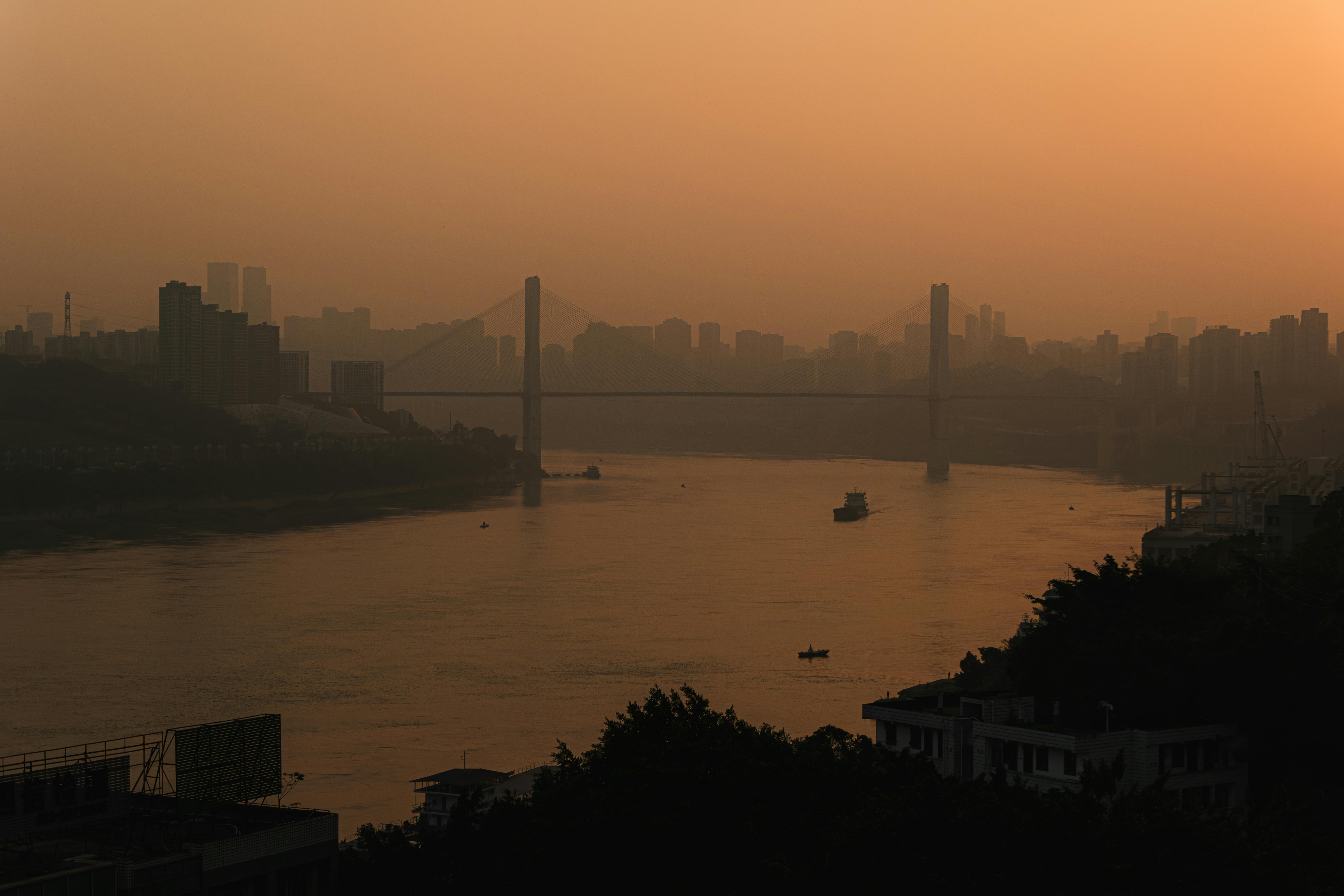
The current extent of light pollution is so great that the Milky Way is no longer visible to one-third of the world’s population, with scientists describing it as a “cultural loss of unprecedented magnitude” [15].
Author: Brentan Lam
Some people fancy living in large, bustling cities like Hong Kong, Tokyo, or New York. Streets that are awash with lights from billboards, marquee signs, and streetlights seem to convey the feeling of wealth and prosperity. But sometimes, when the lights go out, we realize what we’ve been missing. After an earthquake hit Los Angeles in 1994, many residents called emergency services to report “seeing a giant, silvery cloud” [1]. The silvery cloud they saw was not an alien invasion like some thought, it was the Milky Way. Many of those who called emergency services had observed the Milky Way for the first time when most of the lights in the city were knocked out, and did not know what it was [5]. The current extent of light pollution is so great that the Milky Way is no longer visible to one-third of the world’s population, with scientists describing it as a “cultural loss of unprecedented magnitude” [15].
Canada is fortunate that its population is relatively condensed, leaving lots of countryside untouched, and more importantly, dark, as it should be. However, too much light can harm people and the environment [2].
Light pollution can be defined as artificial night-time lighting causing adverse aesthetic, health or ecological effects [2]. Insects have a harder time foraging for food, birds are led astray and strike buildings, and turtle hatchlings wander in the wrong direction and get lost inland, thus making them more likely to die of dehydration and predation [3,4,5]. This article will mainly discuss the implications of light exposure at night for humans.
The key component in regulating our circadian rhythm is melatonin, a hormone secreted in the pineal gland of the brain and subsequently released into the bloodstream [6]. Darkness prompts melatonin to be produced in the pineal gland and light stops the process [6]. This is how the sleep-wake cycle is synchronized, normally, with the night-day cycle [6]. It has been found that light of weak intensity is enough to “phase-shift” our circadian rhythm, impacting the quality and quantity of sleep [7].
Having the sleep cycle thrown out of sync can induce serious health issues. Several immediate effects of having lower melatonin levels include sleep deprivation, depression, anxiety, stress, fatigue, and headaches [8]. Not having enough sleep impairs the process of consolidating skill and memory, which results in noticeably reduced performance in cognitive tasks the following day [9].
The long term effects of light pollution, on the other hand, are harder to ascertain. One of the first studies concerning the health effects of night-time light exposure was conducted in Norway, where a group of female telegraph workers over the age of 50 were examined [10]. It reported a significantly increased risk for the development of breast cancer in women who worked predominantly (>60%) night shift jobs for more than half a year [10]. A US population study of nurses living in 11 states reported that “women working rotating night shifts for a long duration have a significantly increased risk of endometrial cancer, particularly if they are obese”, and attributes it to the relationship between melatonin levels and hormonal and metabolic activities [11].
One crucial point to note is that of interest here is the effect of nighttime light exposure on health. Although exposure to light does indeed affect the circadian rhythm, other aspects in night-shift—the common theme in all these cited research studies—can have similar patterns of effect on the circadian rhythm. After all, night shifts are routinely associated with mistimed eating, social jet lag and sleep deprivation, which can all contribute to disruption of melatonin levels [12]. Therefore, while there is a correlation between cancer and night shifts, it is difficult to conclude whether light exposure is primarily to blame. That said, the American Medical Association (AMA) continues to support efforts to control light pollution and conduct research in this field [8].
A study has found that the Earth’s artificially illuminated areas have been expanding by about 2.2% per year, with the total brightness of all lighting increasing by 1.8 % annually [13]. In other words, our nights are getting steadily brighter. Some European nations have begun to fight the issue head-on, adopting policies to restrict light pollution [14]. Increasingly, excessive light is being recognized not just as an environmental concern but as a public health issue [14]. France stands out as a leader in this movement, imposing a “light curfew” in certain areas, limiting the amount of light shone upwards to the sky, reducing the effect of glare, restricting the color temperature of outdoor lights to a warmer 3000K [14].
Some countries have taken the first step in reducing light pollution, and we can too. By telling our politicians to address these issues, and by raising awareness, we can gradually reclaim the dark skies, both for public health’s sake and for the environment.
Editors
Kaz Shuji, Rawad Al-Aarg, Majd Al-Aarg (Editor-in-Chief)
Designer
Web design by Michael Maghruos
Additional Credits
Photo by Curtis M
References
- Chepesiuk R. Missing the Dark: Health Effects of Light Pollution. Environ Health Perspect [Internet]. 2009 Jan [cited 2021 Nov 3]; 117(1): A20–A27. Available from: https://www.ncbi.nlm.nih.gov/pmc/articles/PMC2627884/
- Finnish Environment Institute [Internet]. Towards eco-efficient and enjoyable lighting; 2015 [cited 4 Nov 2021Available from: https://sustainabledevelopment.un.org/content/documents/5520Light%20pollution_rev.pdf
- The Guardian [Internet]. London (UK): Light pollution is key “bringer of insect apocalypse”; 2019 [cited 6 Nov 2021]. Available from : https://www.theguardian.com/environment/2019/nov/22/light-pollution-insect-apocalypse
- BBC [Internet]. London (UK): The argument for switching off lights at night; 2021 [updated 2021 Jul 19; cited 6 Nov 2021]. Available from: https://www.bbc.com/future/article/20210719-why-light-pollution-is-harming-our-wildlife
- Thums M, Whiting S, Reisser J, Pendoley K, Pattiaratchi C, Proietti M et al. Artificial light on water attracts turtle hatchlings during their near shore transit. Royal Society Open Science [Internet]. 2016 May [cited 2021 Nov 2]; 3(5). Available from: https://doi.org/10.1098/rsos.160142
- Sleep Foundation [Internet]. Seattle (WA): Melatonin and Sleep; 2021 [cited 6 Nov 2021]. Available from: https://www.sleepfoundation.org/melatonin
- Touitou Y. Light at night pollution of the internal clock, a public health issue.Bull Acad Natl Med [Internet]. 2015 Oct [cited 2021 Nov 4];199(7);1081-1098. Available from: https://pubmed.ncbi.nlm.nih.gov/29879330/
- National Geographic [Internet]. Washington (DC): Light Pollution; 2019 [updated 15 July 2019; cited 6 Nov 2021]. Available from: https://www.nationalgeographic.org/article/light-pollution/12th-grade/
- Drake C, Roehrs T, Richardson G, Walsh J, Roth T. Shift Work Sleep Disorder: Prevalence and Consequences Beyond that of Symptomatic Day Workers. Sleep [Internet]. Dec 2004 [cited 2021 Nov 5];27(8):1453-1462. Available from: https://doi.org/10.1093/sleep/27.8.1453
- Tynes T, Hannevik M, Andersen A, Vistnes A, Haldorsen T. Incidence of breast cancer in Norwegian female radio and telegraph operators. Cancer Causes and Control [Internet]. March 1996 [cited 2021 Nov 2];7: 197-204. Available from: https://link.springer.com/article/10.1007%2FBF00051295#citeas
- Viswanathan A, Hankinson S, Schernhammer e. Night Shift Work and the Risk of Endometrial Cancer. Cancer Research [Internet]. Nov 2007 [cited 2021 Nov 4];67(21):10618-10622. Available from: https://cancerres.aacrjournals.org/content/67/21/10618.full-text.pdf
- Walker W, Bumgarner J, Walton J, Liu J, Melendez-Fernandez O, Nelson R. Light Pollution and Cancer. IJMS [Internet]. Dec 2020 [cited 2021 Nov 6];21(24):9360. Available from: https://www.mdpi.com/1422-0067/21/24/9360#cite
- Time Magazine [Internet]. New York (NY): Light Pollution Is Getting Worse Every Year. That’s Bad For Your Health; 2017 [cited 6 Nov 2021]. Available from:https://time.com/5033099/light-pollution-health/
- International Dark-Sky Organization [Internet]. Tucson (AZ): France Adopts National Light Pollution Policy Among Most Progressive In The World; 2019 [cited 3 Nov 2021]. Available from: https://www.darksky.org/france-light-pollution-law-2018/
- The Guardian [Internet]. London (UK): Milky Way no longer visible to one third of humanity, light pollution atlas shows; 2016 [cited 6 Nov 2021]. Available from: https://www.theguardian.com/science/2016/jun/10/milky-way-no-longer-visible-to-one-third-of-humanity-light-pollution
 Hands On Health Magazine